BNPL Malaysia 2026: RM5.4 Billion in Youth Transactions, SPayLater & Atome Risks
Malaysians aged 30 and below made RM5.4 billion in BNPL transactions—not outstanding debt. Learn how to assess SPayLater and Atome costs, overlapping instalments and consumer protections.

Source: Finance Ministry via Bernama (13 Oct 2026); Consumer Credit Commission (SKP)
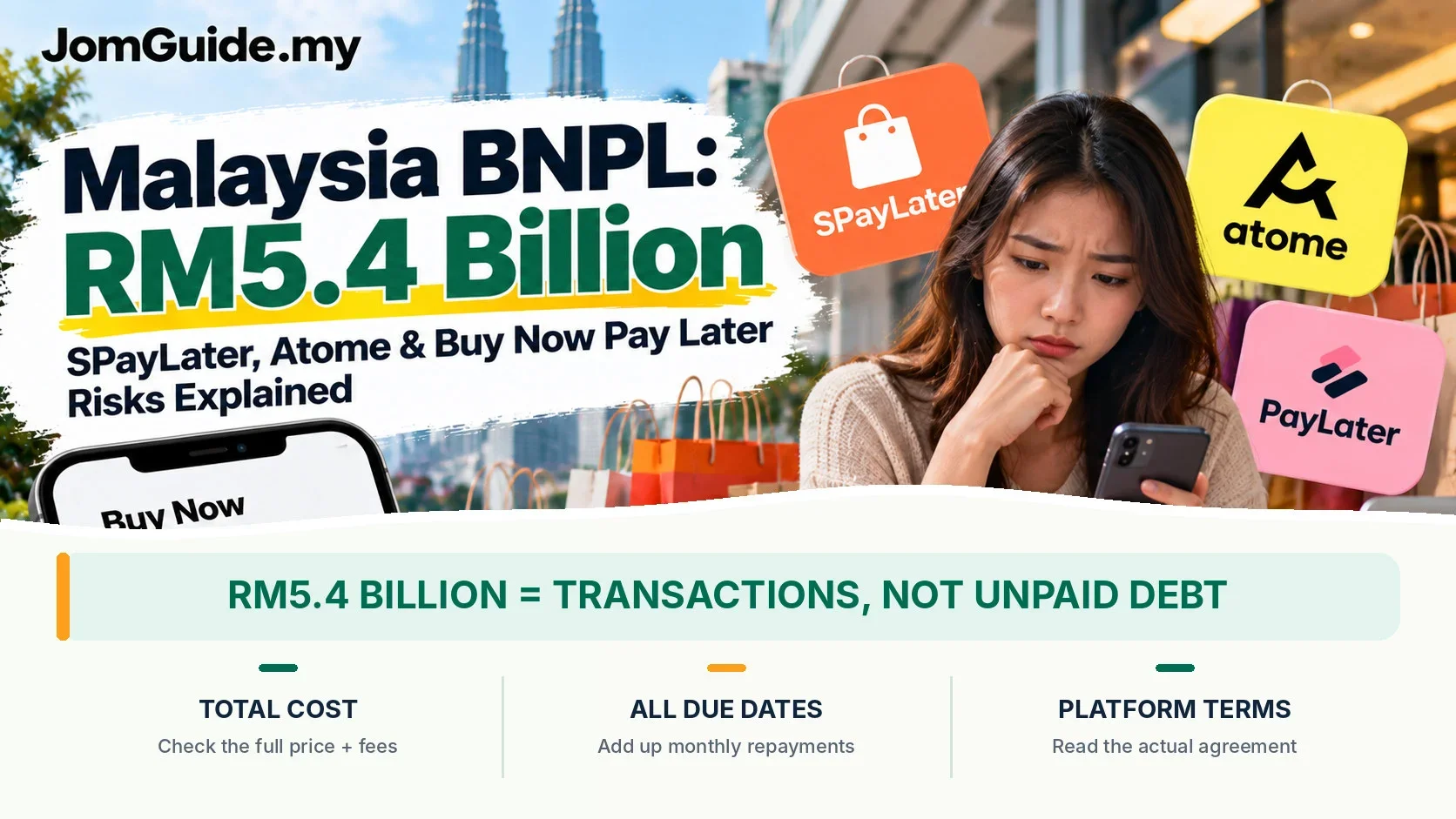
Updated 15 October 2026. Young Malaysians aged 30 and below completed 65.9 million buy now, pay later (BNPL) transactions worth RM5.4 billion in the first six months of 2026, according to Finance Ministry data reported to Parliament.
That headline needs a crucial distinction: RM5.4 billion is the value of transactions, not the amount everyone still owes. At 30 June, the group's outstanding BNPL financing balance was RM2.4 billion, of which RM96.8 million was reported as non-performing financing—around 4% of the outstanding amount. These are aggregate figures, not proof that every young user is behind on payments. Source: Bernama.
What is BNPL—and how is it different from paying cash?
Services such as SPayLater and Atome let eligible customers purchase now and pay later under terms that depend on the provider and selected plan. A checkout screen may divide a purchase into instalments, but the total payable, fees, due dates, return handling and missed-payment consequences may vary.
Do not assume all BNPL plans are interest-free or free of charges merely because the first instalment looks small.
Understanding the Finance Ministry's figures
| Metric | First half of 2026 / at 30 June |
|---|---|
| Transactions by users aged 30 and below | 65.9 million |
| Value of those transactions | RM5.4 billion |
| Total value across all age groups | RM14.7 billion |
| Outstanding financing among younger users | RM2.4 billion |
| Non-performing portion of outstanding financing | RM96.8 million (around 4%) |
Transaction volume measures purchases made in a period. Outstanding financing is what remained payable at a point in time; the non-performing portion is not interchangeable with total outstanding debt. Treat the figures as evidence of BNPL's reach, not as a verdict on every user.
A RM1,000 purchase: why monthly commitments add up
Illustrative maths only—not the price or terms of any specific provider.
Assume a RM1,000 purchase can be paid in four equal instalments with no extra charges: RM250 per instalment. You also have two earlier commitments due monthly at RM120 and RM90.
| Commitment due this month | Amount |
|---|---|
| New RM1,000 purchase, four-payment illustration | RM250 |
| Existing plan A | RM120 |
| Existing plan B | RM90 |
| Total to reserve | RM460 |
That RM460 is before transport, food, phone bills or rent. Plans may use different instalment frequencies and fees. The illustration's lesson is that several small “only RMxx a month” purchases can become one sizeable obligation.
Comparing SPayLater and Atome responsibly
Rather than claiming one provider is always cheaper, check the specific plan offered at checkout:
- Total cost: Is the pay-later price higher than the cash price?
- Fees: Are financing, administrative or processing charges added?
- Schedule: When is each instalment due, and how many remain?
- Late payment: What fees, account restrictions or recovery steps could follow?
- Returns: What happens to pending instalments if the seller refunds the item?
- Early settlement: Is it allowed, and how does the total payable change?
- Support: How do you make a formal billing dispute?
Current terms can vary by product, plan or promotion. This article does not invent a fee table or recommend borrowing through one platform over another.
Consumer Credit Act 2025: what changed in 2026?
Malaysia's Consumer Credit Act 2025 (Act 873) took effect on 1 March 2026, with the licensing and registration provisions beginning on 1 June 2026. The Consumer Credit Commission (SKP) regulates relevant non-bank credit providers, including BNPL operators, with a transition period for applications.
This is a move towards clearer conduct and consumer protection—not a government guarantee that all instalments are safe or that every debt will be forgiven. SKP implementation statement.
SKP's consumer guidance highlights due dates, late charges and the risk of stacking BNPL services. It also advises consumers to complain to the provider first and use the appropriate SKP complaint route when a provider does not respond or the resolution is unsatisfactory.
Already using multiple PayLater plans? A practical reset
- Make one list of each provider, remaining total, upcoming instalments and due dates.
- Add together all payments due next month.
- Compare that total with essential expenses; avoid adding more unnecessary instalments while commitments are tight.
- If repayment may be difficult, review the actual terms and contact the provider early about legitimate options.
- For an unauthorised charge or an incorrect bill, use the provider's formal dispute process and keep records. Secure your account if you suspect a compromise.
The point is clarity about what you owe, not moralising about whether anyone should ever use instalments.
FAQ
Is BNPL free money if the plan says “interest-free”?
No. It is still a future payment obligation, and other conditions or charges may apply.
Can different BNPL plans be due on the same day?
Yes, overlapping commitments are a practical risk. Track the full calendar, not one app in isolation.
Does every BNPL transaction appear on CCRIS or CTOS?
Do not assume either way. Reporting arrangements and products can vary; check the actual provider's disclosures and the relevant credit report.
What if a provider ignores my complaint?
Keep evidence and consult SKP's official complaints guidance to determine the appropriate escalation route.
The takeaway
Affording the first instalment is not the same as affording the entire plan. Before agreeing to BNPL, ask whether you could still cover essential expenses if all your existing instalments fell due in the same month.
Sources: Finance Ministry figures via Bernama · SKP Consumer Credit Act implementation · SKP BNPL consumer guide · SKP FAQ · JomGuide CCRIS vs CTOS explainer
Useful? Forward it to someone who needs it.
Malaysian policy and hot topics, 2–3 items a week, each with a one-line “so what”.