Does Your Employer Have to Pay a Year-End Bonus? Contractual vs Discretionary Bonuses in Malaysia
Malaysian law doesn't require a year-end bonus, but one promised in your contract or collective agreement is yours to claim. How the two types differ, what happens if you resign or are retrenched, and how EPF and PCB apply.


Source: Source: Donovan & Ho, Allen & Gledhill, JTKSM, TimeTec (Jun 2026)
The short answer: no Malaysian law says your employer must pay a year-end bonus. Whether you're entitled to one depends on what your contract, staff handbook or collective agreement says. "One month's salary every year" is a contractual bonus. "At the company's discretion" or "subject to company performance" leaves the decision largely with your employer.
Two kinds of bonus, two very different positions
| Contractual bonus | Discretionary bonus | |
|---|---|---|
| Typical wording | "One month's basic salary each year" | "Bonus is at the company's discretion" |
| Can the employer skip it? | Generally no | Yes |
| What if the company loses money? | Courts have treated it as not conditional on profit | Performance can be taken into account |
| Can you claim it? | Yes | Difficult, unless you were treated unfairly |
Years of discretionary bonuses don't create a right
In Leo Burnett Advertising v Agnes Ann Rodriquez, an employee had received a bonus four years running, but the handbook said it was discretionary. The Industrial Court held she had no right to it, and the employer could take her performance into account.
Discretionary doesn't mean arbitrary
Cases summarised by the law firm Donovan & Ho show that courts will check whether discretion was exercised fairly:
- In Revertex, the company withheld bonuses from 10 low-rated employees while others with the same rating were paid. The Industrial Court found an unfair labour practice.
- Employees with the same rating should be treated the same. Amounts can vary with individual performance, but like cases must be treated alike.
Contractual bonuses can be pro-rated after retrenchment
In the 2021 Ramada Plaza Melaka case, a collective agreement promised a one-month annual bonus. The hotel closed mid-year because of the pandemic, retrenched its staff and paid no bonus. The Industrial Court awarded pro-rated bonuses because:
- a contractual bonus is effectively deferred salary and doesn't depend on profit; and
- the clause didn't require staff to still be employed at year-end.
A clause that expressly requires you to be employed on the payment date could change the outcome.
Your employer says no bonus this year. What can you do?
JomGuide's advice: start with your contract and staff handbook. Most bonuses are discretionary and tied to company and individual performance, so work out which kind you have before deciding what to do next.
- Find the written terms. Check your offer letter, employment contract, handbook and any collective agreement for words like "guaranteed", "fixed" or "discretionary".
- If it's contractual: ask HR in writing and keep a record. If it's still not paid, you can file a claim at the Labour Court under the Labour Department (JTKSM). In Mashyur Mutiara, the High Court confirmed the Labour Court can hear claims for bonuses due under a contract of service.
- If it's discretionary: it's usually hard to claim. But if you can show colleagues with the same rating were paid and you weren't, that may be unfair treatment. Ask the company in writing to explain its criteria.
Resigning right after the bonus lands?
JomGuide's view: that's perfectly normal. You earned it with a year's work.
Before you hand in your letter, check two things:
- Clawback clauses. Some employers require part of the bonus back if you leave within a set number of months.
- "Employed on the payment date" conditions. If your terms have one, resigning or leaving before the payout could cost you the bonus.
For notice periods and unused leave, see Resigning With 8 Days of Annual Leave.
Is a bonus subject to EPF and PCB?
According to a June 2026 summary from payroll provider TimeTec:
- EPF: yes. Bonuses count as wages under the EPF Act, so the employee's 11% and the employer's share apply.
- SOCSO and EIS: no. Annual bonuses fall outside their definitions of wages.
- PCB: more is deducted that month. Employers use the additional-remuneration method, so the bonus month's tax looks high. Your final tax is settled when you file, and any overpayment is refunded.
FAQ
Does the law require employers to pay a bonus?
No. It depends on your contract, handbook or collective agreement.
I've had a bonus for years and suddenly got none. Is that illegal?
Usually not, if your terms say the bonus is discretionary. Courts have held that years of discretionary bonuses don't turn into a right.
Colleagues with the same rating got a bonus and I didn't. What can I do?
Ask your employer in writing to explain its criteria. Courts have found that treating employees with the same rating differently is an unfair labour practice.
Can I still get a bonus if I'm retrenched?
If it's a contractual bonus and the clause doesn't require you to be employed at year-end, you may be entitled to a pro-rated amount.
This is general information, not legal advice. For your specific situation, consult the Labour Department or a lawyer.
Useful? Forward it to someone who needs it.
Malaysian policy and hot topics, 2–3 items a week, each with a one-line “so what”.
Related articles
More in Jom Explain-
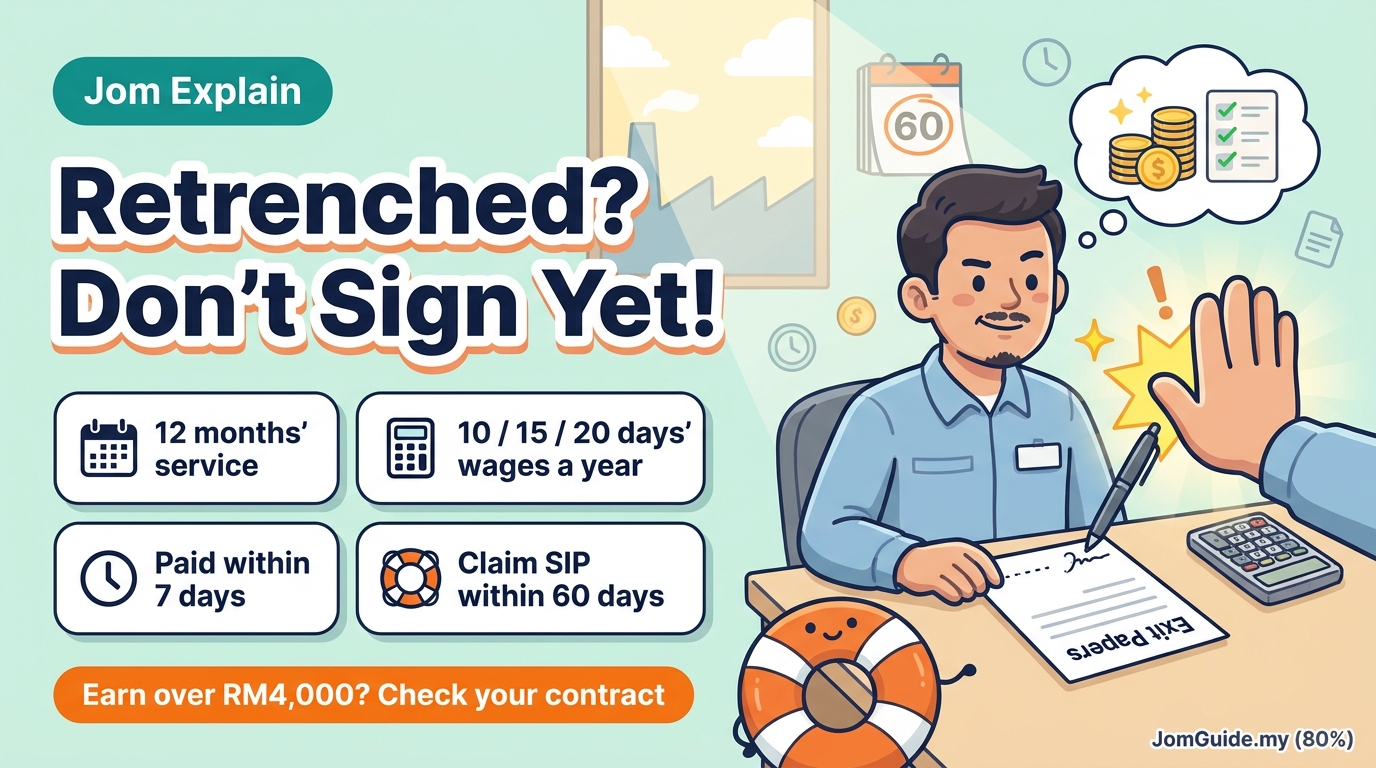
Retrenched in Malaysia? Don't Sign Yet: How Termination Benefits Are Calculated, Plus PERKESO's Higher SIP Payouts From October
-
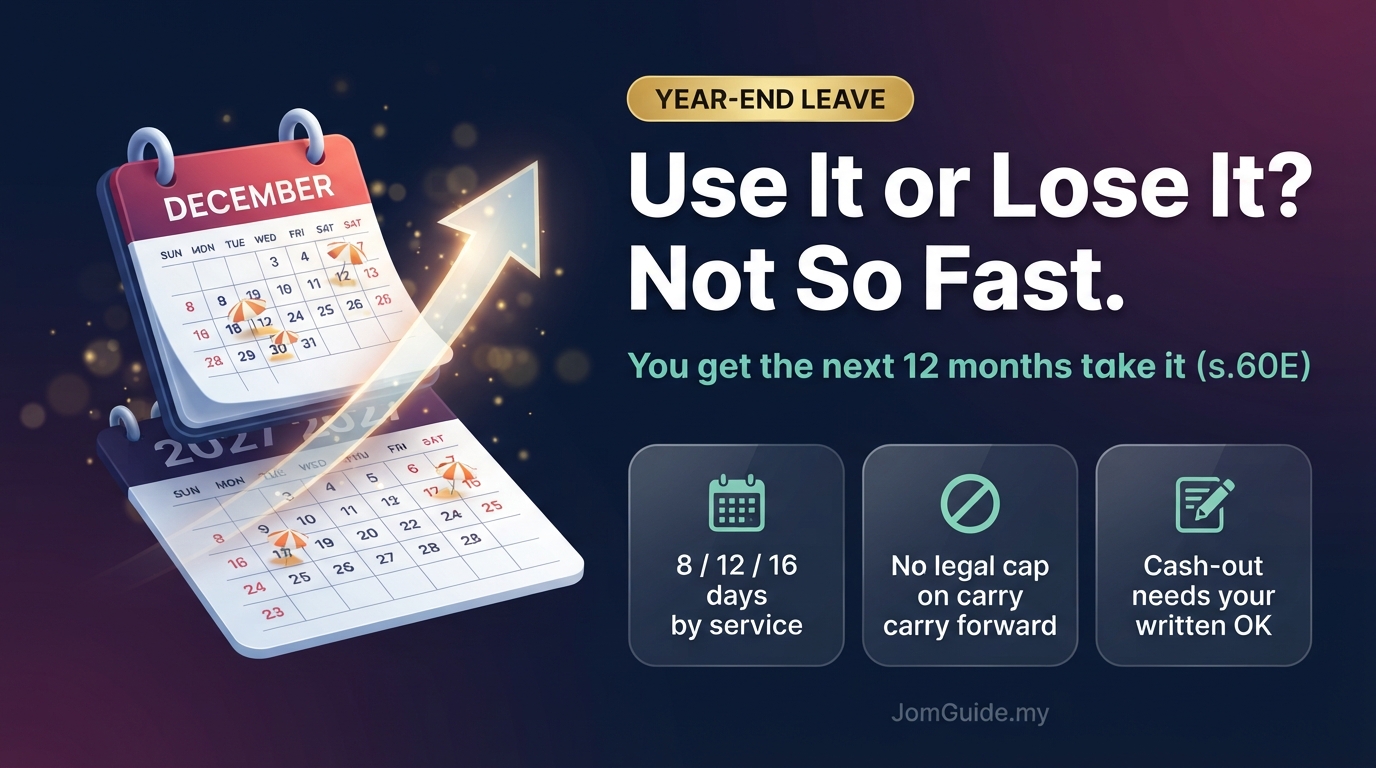
Does Unused Annual Leave Expire? Malaysia's 12-Month Rule, Carry-Forward Caps and Cashing Out Leave
-
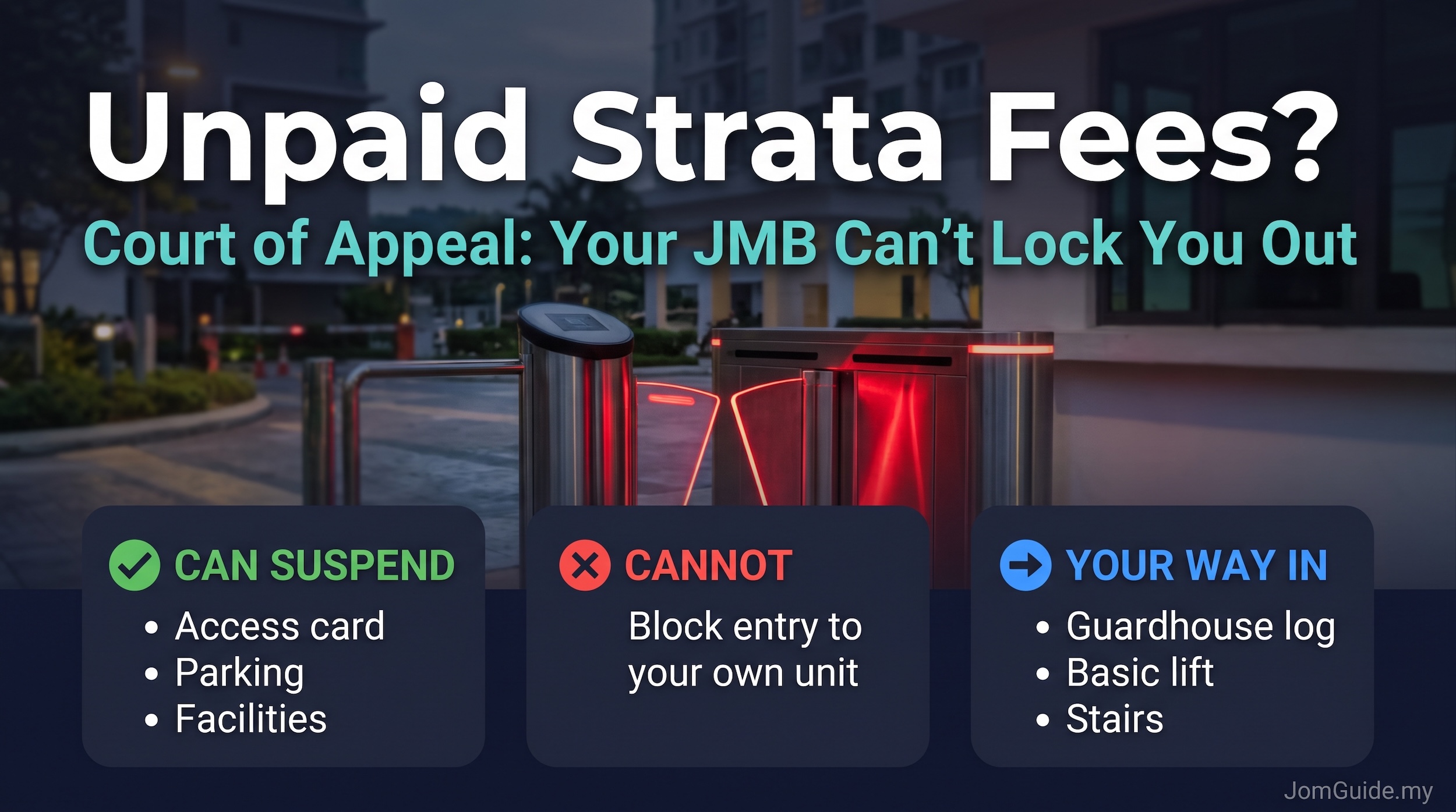
Behind on Strata Maintenance Fees? What Your JMB Can and Can't Do After the Court of Appeal Ruling