
Scammed in Malaysia? Do These 3 Things First
If you have just realised you were scammed, do not waste the first moments researching the scam. Call NSRC 997, contact the relevant bank, then lodge a police report. Here is the simplest order to follow.

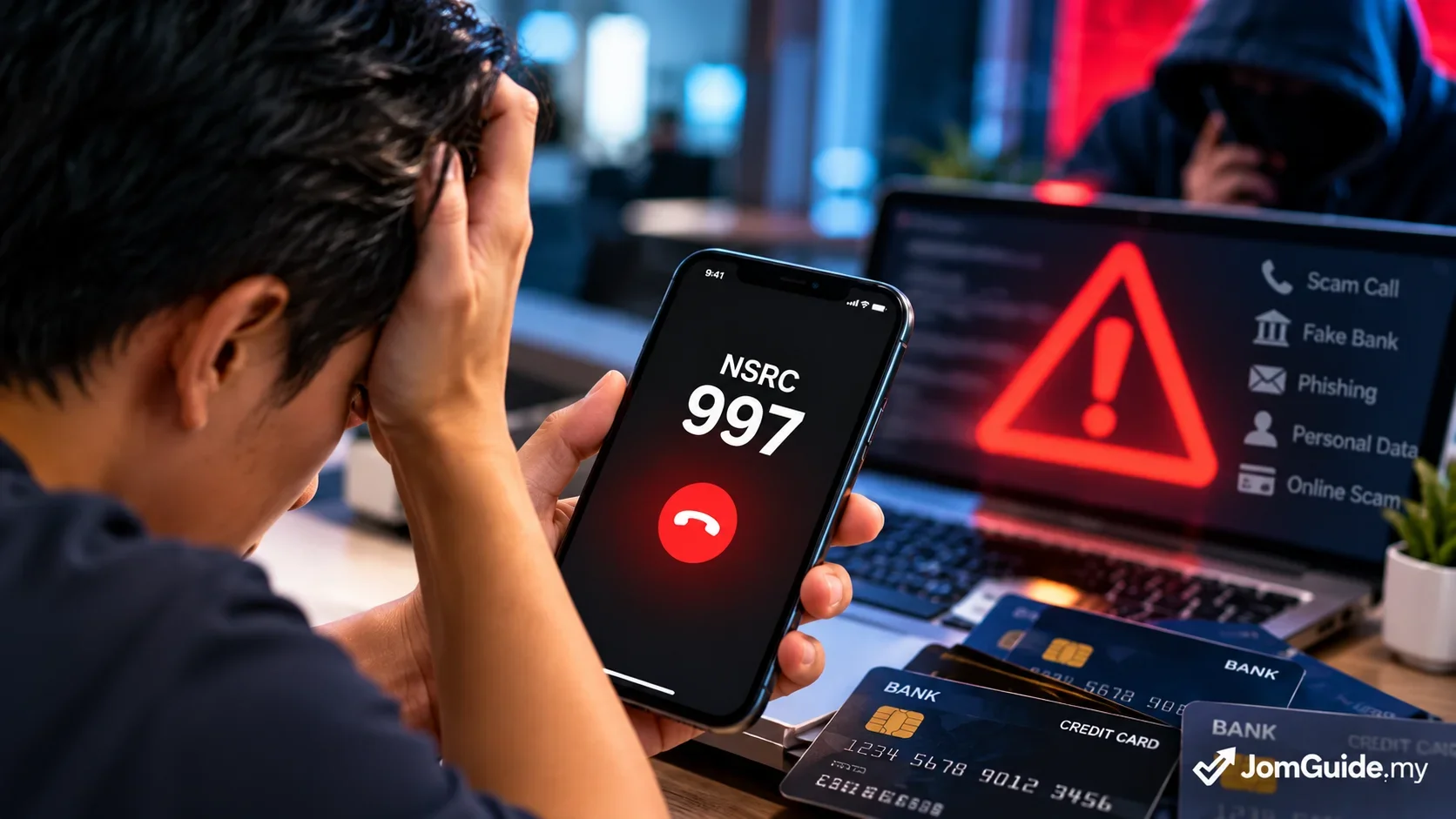
Source: Source: Malaysia.gov.my / National Scam Response Centre (NSRC), updated 31 Jul 2026
When people realise they have been scammed, the biggest problem is often not a lack of information.
It is panic.
They start rereading messages, asking friends, searching for the scam type or continuing to argue with the scammer.
If money is involved, remember one simple order:
997 → bank → police station.
Step 1: call NSRC 997
Malaysia’s National Scam Response Centre can be reached at 997.
Official information currently lists the hotline as operating 24 hours a day.
Malaysia.gov.my advises victims to call within 24 hours of discovering the scam so the relevant authorities can try to block accounts or financial transactions.
If you have just realised you transferred money to a scammer, do not spend the first hour researching the scam.
Call 997.
Step 2: contact the relevant bank
You should also contact the financial institution involved in the transaction as soon as possible.
Tell the bank:
- You believe you were scammed
- Which transaction is involved
- Roughly when it happened
- The amount involved
Do not wait until you have written a perfect explanation.
Report the problem first, then follow the bank’s instructions for additional information.
Step 3: lodge a police report
Malaysia.gov.my also advises scam victims to lodge a report at the nearest police station.
Bring whatever basic evidence you have, such as:
- Transfer records
- Transaction screenshots
- Recipient account details
- Phone numbers
- Chat records
- Advertisement or website information
You do not need to identify the exact type of scam before making the report.
Focus on giving a clear factual account of what happened.
What if more than 24 hours have passed?
You should still act.
Contact the relevant bank and lodge a police report.
The first 24 hours matter because faster action may improve the chance of stopping funds from moving further.
But being late does not mean you should do nothing.
What about bank transfers, cards and e-wallets?
The basic rule is the same: contact the provider that handled the money.
Bank transfer
Call the relevant bank and NSRC 997.
Credit or debit card
Contact the issuing bank and follow its fraud or dispute process.
E-wallet
Contact the e-wallet provider through its official support channel and preserve the transaction details.
Each provider may have different procedures, so follow the official instructions from the institution you actually used.
A common mistake: panicking
After a scam, panic can lead to more bad decisions.
Examples include:
- Continuing to talk to the scammer
- Paying another amount because they promise a refund
- Trusting someone who claims they can recover the money for a fee
- Clicking new links sent by the same scammer
- Delaying a report out of embarrassment
A safer rule is simple:
Stop sending money, stop following new instructions from the scammer and move to official reporting channels.
Victims also need to stay cautious
Scam methods keep changing.
No checklist can guarantee that someone will never be tricked.
Banks, platforms and enforcement agencies all have roles to play, but individuals also need to pause before transferring money, clicking links or sharing personal information.
Extra caution is especially important when someone creates intense urgency and says you must act immediately.
JomGuide emergency checklist
If you have just been scammed, you do not need to read the whole guide first.
Do this:
- Call NSRC 997
- Contact the relevant bank, e-wallet or card issuer
- Lodge a police report
- Keep transaction records, chats and account details
- Do not send more money or follow new instructions from the scammer
Do those first.
Understanding every scam technique can come later.
The priority is to act quickly.
Useful? Forward it to someone who needs it.
Malaysian policy and hot topics, 2–3 items a week, each with a one-line “so what”.