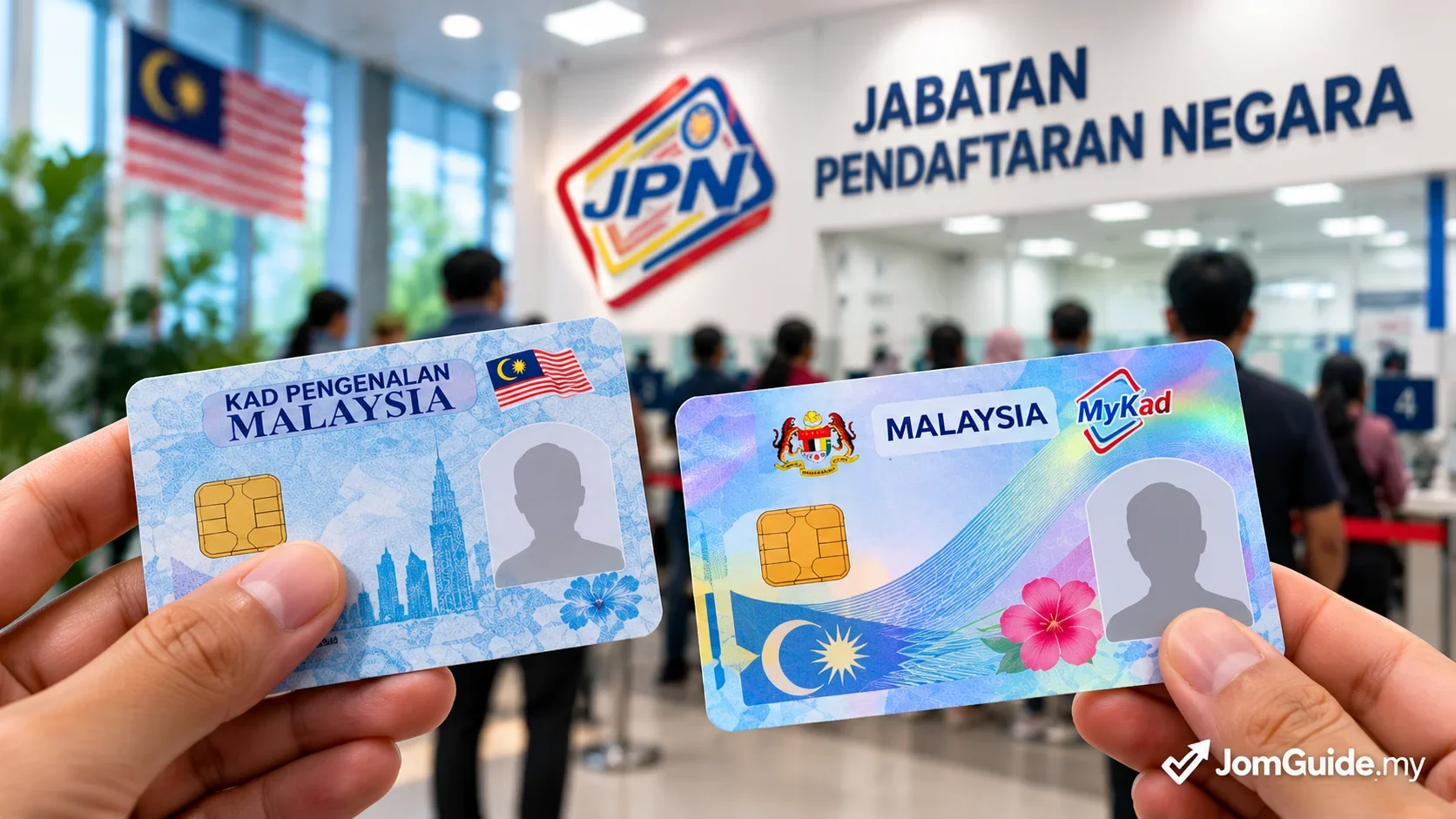
New MyKad Is Here: Do You Need to Replace Your Old IC Now?
Malaysia’s new-generation MyKad has started rolling out, but existing cards do not need to be replaced immediately. Here is what JPN says about old cards, aid and subsidies, and when replacing your IC actually makes sense.

Source: Source: Jabatan Pendaftaran Negara (JPN), 2026
Malaysia’s new-generation MyKad has started rolling out, but that does not mean everyone needs to rush to JPN for a replacement.
If your current MyKad still works, your details are correct and you have no practical reason to replace it, there is currently no need to queue up just to get the newer design.
The key point: you do not need to replace it just because a new version exists
JPN says the new-generation MyKad began rolling out in phases from 17 September 2026.
The transition is gradual. Existing MyKad cards do not suddenly become invalid.
According to JPN:
- You do not need to visit JPN solely to obtain the new-generation card
- Your MyKad number will not change
- Existing cards remain valid during the transition
- Government aid and subsidies should continue as usual for eligible recipients
So if your current IC works properly, continuing to use it is fine.
When does replacing your MyKad make sense?
Replacing it simply because other people already have the new version is not a strong reason.
More practical situations include:
Your card is damaged
If the chip cannot be read, the card is badly damaged or it is affecting normal transactions, replacement may be necessary.
Your MyKad is lost
A lost card should be replaced through the normal JPN process.
You already need to make an official replacement
If you need a new card because of a formal update or another valid administrative reason, follow JPN’s normal procedure.
Will keeping the old MyKad affect aid, subsidies or SARA?
JPN has stated that the transition to the new-generation MyKad should not interrupt government aid or subsidies for eligible Malaysians.
Not having the newest card does not automatically mean losing your benefits.
This is important because MyKad-related rumours can spread quickly online. Before acting on such claims, check whether they came from JPN or another relevant government agency.
What about banks, eKYC and other services?
JPN says implementation has taken into account services that rely on MyKad, including banking and other systems.
Adjustments may happen gradually across different providers.
If a bank, eKYC system or service counter has difficulty reading a new-generation MyKad, check with that provider first instead of assuming the card itself is invalid.
How long does replacement take?
JPN says branches equipped to print the new-generation MyKad may be able to complete eligible applications on the same day.
Branches without printing facilities may take around five working days.
But for many people, the bigger inconvenience is not the card printing itself — it is travelling to the branch, queuing and waiting.
If there is no actual need to replace your card, that time may not be worth spending just to get the newest version.
JPN also recommends making an appointment before visiting.
Would we replace it immediately?
If the current MyKad still works and there is no fine, mandatory replacement requirement or practical reason to change it, we would not rush to replace it.
An identity card is primarily there to prove identity, not to be upgraded like a gadget.
If JPN later introduces a compulsory replacement deadline or old cards begin causing real service issues, that would be the time to reconsider.
JomGuide takeaway
Before deciding whether to replace your MyKad, check three things:
- Does your current card still work?
- Do you have a real administrative reason to replace it?
- Is the information you saw from an official source?
If the answer is yes, no and yes respectively, there is little reason to queue just because a new design has launched.
For MyKad, subsidy and government-aid updates, JomGuide prioritises official sources before treating a claim as confirmed.
Useful? Forward it to someone who needs it.
Malaysian policy and hot topics, 2–3 items a week, each with a one-line “so what”.